
Pursue your own unique career pathway in engineering, or enter an emerging field.
With the Bachelor of Science in Engineering (BSE) degree, turn your ideas into a reality. Customize this engineering degree to fit your interests. The BSE curriculum includes courses fundamental to all engineering disciplines. It offers a multitude of elective courses for flexibility. Customize up to 40 percent of your degree path. Select any area of study to blend with an engineering focus. You are free to reflect on your own interests.
Request Information
Four Pathway Options
EngineeringPlus
Discover your path! EngineeringPlus starts with a broad foundation in math, science, and general education. The curriculum stands upon a strong engineering base. Select upper level engineering courses in your area of interest. The program has integrated space to tailor your degree with one of 80 minors. Choose from Business, Law and Society, Public Health, ROTC Leadership, and many more. EngineeringPlus gives you flexibility. Personalize your career path and still stay within 125 total credits.
Engineering with Business
Engineering with Business has the same broad foundation. Math, science, general education, and a strong engineering base combine with a business emphasis. This path allows you to personalize your degree. Select upper level engineering and business courses in your area of interest. The program has integrated space to tailor your degree with one of 80 minors.
Systems Engineering
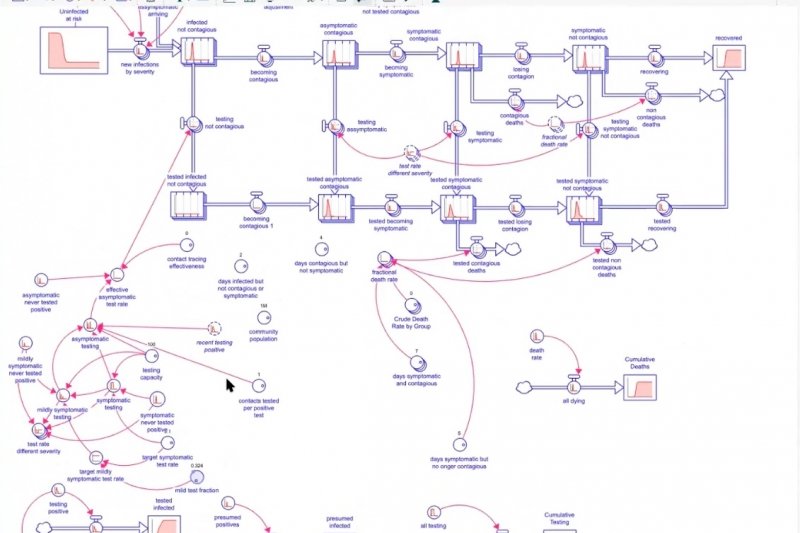
Systems engineers apply low-fidelity modeling to test ideas and user flows. They use this method to understand, design, and manage complex systems. Analysis takes place over a system life cycle. As management leaders, systems engineers use systems thinking and interdisciplinary skills. Their knowledge spans all areas of engineering and management. At Michigan Tech, you will complete courses in the systems engineering core. You will move on to a diverse range of engineering, science, and business topics. Threaded through the entire program is an emphasis on a systems dynamics approach. You will form an understanding complex, multi-disciplinary systems, and systems of systems.
The Systems Engineering Program aims to develop graduates who can cross disciplinary boundaries. Develop agile learning skills for new topics. Social and natural systems embed complex, engineered networks. You will manage those networks and systems. If you have an interest in both engineering and business, Systems Engineering may be for you.
Customize Your Degree with an Individualized Plan
Design roller coasters. Use nanoparticles to treat cancer. Design underwater habitats for humans. At Michigan Tech, you can create your own path by customizing your engineering degree. We will help develop a curriculum to meet your focus. We combine faculty expertise from across campus to prepare you. You are free to pursue your chosen field or continuing education.
Tomorrow Needs Teams That Communicate and Solve Engineering Problems
An engineering degree teaches analysis and design. It allows you to find solutions in public and global sectors. Learn to interpret data, perform experiments, and communicate in complex engineering projects. The BSE degree program at Michigan Tech offers unparalleled opportunities in undergraduate education:
- A personalized engineering degree with the option of adding a minor
- A solid education in basic engineering principles
- The ability to customize your engineering degree
- New and innovative course work
My Story: Nick McCole, MTUengineerThis choice has opened many doors for me. Systems Engineering is a field I plan on staying in for the foreseeable future. This summer I worked as an electrical/systems engineer intern at Milwaukee Tool. In addition to Milwaukee Tool, I’ve been fortunate to have internships at Ford, Mercury Marine and Boss Snowplow.